
Welcome to our blog post that highlights from a local adventure!

Welcome to our latest posting… but before I continue could I ask a favour? I truly appreciate your comments and look forward to reading them all! However, frequently they appear as being written by my old friend “Anonymous”! If you’re willing, please add your name somewhere in your comment so I can be sure who has sent it! Thanks!

We interrupt this Blog Post to pass on a couple of important nuggets of wisdom… basically trivia about one of the most plentiful seabirds in the Yucatán, the Brown Pelican.
Vocalization: I’m sure we’ve all seen a brief, a pod, a pouch, a scoop, or a squadron of pelicans silently gathering by a fishing boat hoping for a handout and not squawking like a squabble of seagulls!
According to “All About Birds” from the Cornell Labs, the Brown Pelican (Pelecanus occidentalis), unlike the Great-tailed Grackle (Screechimus maximus), adults are silent except during wing-jerking displays, which force air from their lungs and produce a low, hoarse sound. Nestlings use a shrill, rasping squawk to beg for food. Thanks to Val & George for bringing this to our attention!
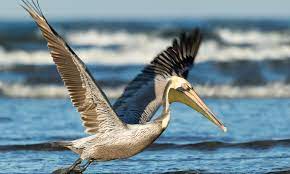
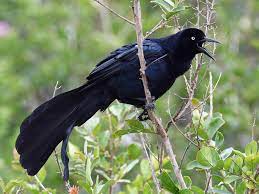
Diving: The other day, while Raymond and I were standing on the beach, he asked if I had seen that when the Brown Pelican dives in for fish, they always turn their bodies to the left as they complete their dive! Of course, I hadn’t… so, being keen scientific observers, we spent a few minutes in observation. And in every case of a dive, all of them turned to the left!
Of course, we then wondered if the Brown Pelican of Australia (Pelecanus downunderis) would turn to the right!
In addition, we wondered how they didn’t actually kill themselves, as we would, when diving into the water from height! So courtesy of Audubon.org, and they should know, here’s the answer!
“Air sacs beneath the skin on their breasts act like cushions. Also, while diving, a pelican rotates its body ever so slightly to the left. This rotation helps avoid injury to the esophagus and trachea, which are located on the right side of the bird’s neck.”
We return you now to the originally scheduled Blog Post…
We had planned to have lunch with Val & George at the Picuda in Telchac Puerto for some time! And we finally did it!
We embarked on a short road trip East on the Costera …
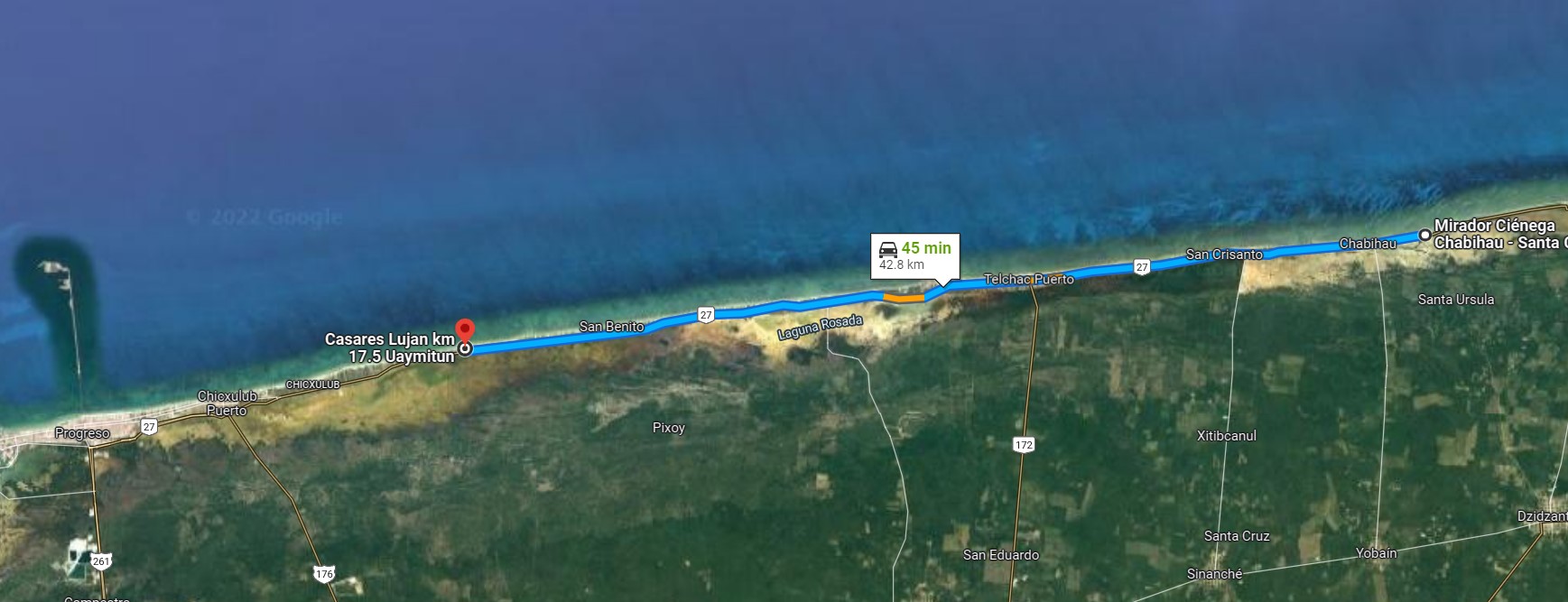
… so off we went up to Telchac Puerto! So much new construction everywhere! Multiple new condo buildings between San Bruno and Telchac!
Onwards through San Crisanto and Chabihau until we found a nice place to stop at Playa Marmota (Groundhog Beach).


After an enjoyable walkabout on Playa Marmota, we returned to San Crisanto via Chabihau and turned off the road to park by the square!
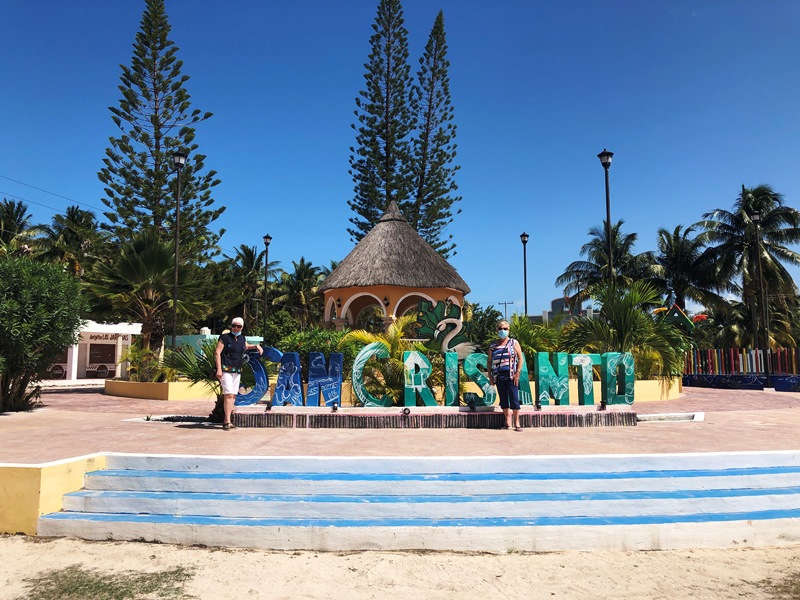


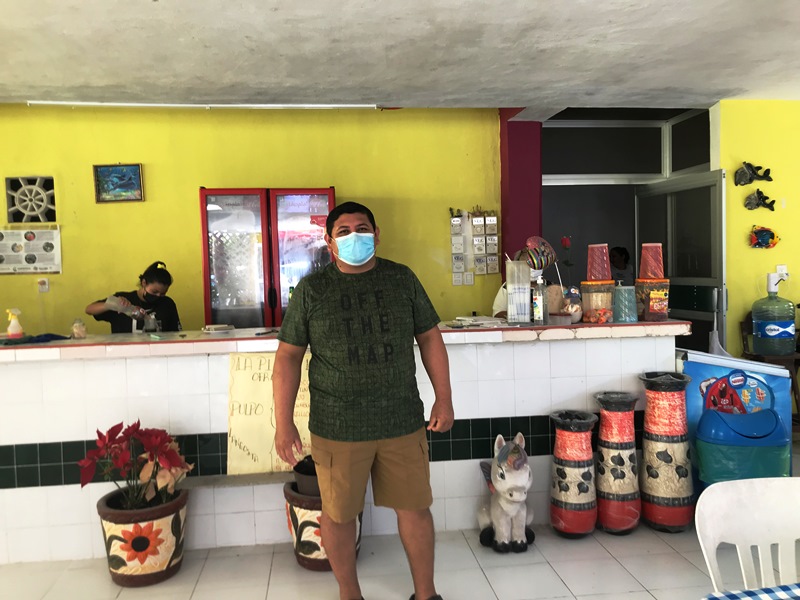
As the temperatures rose, we hankered after some shade and some lunch, so we continued homeward back to Telchac Puerto to our fav… La Picuda!


After lunch, we couldn’t head for home without a walk on the pier!


Special thanks to George for suggesting the title to this blog and forgiveness for plagiarism from John Grisham!
That’s it for this blog post! Until next time…
Cheers!
Love to all,
-Doug and Elaine
Thanks for our Science Lesson today!
Another great blog brother, such fun exploring down here, and learning interesting new stuff. I especially loved the “screechimus maximus”
I remember La Picuda. Enjoyed our meal there the last time we in Mexico.
Roger
Is the Telchac sign new?
Love the Pelicans! Thanks for the science lesson.
Love Doug’s Merida t-shirt!
Garlic !!!
Can’t wait to return!
Miss you both
Deb and Dave
Loved the information on the pelicans I enjoyed watching them dive when I was at the beach! Great photos again Doug! Elaine looks smashing with the dolphins and turtle. Glad your both well take care love Ann xx